BRE12 What do French offshore wind farms really produce?
- Generated by AI
Brest
- Organisation
- CEREMA
- Matthieu Suire
- As we electrify transport, industry and heating, we'll need far more electricity — and it has to be clean. Offshore wind is one of France's strongest cards: powerful, steady sea winds and the world's second-largest maritime area. But making the most of it means knowing where to place farms and being able to predict what they'll actually generate. And here's the blind spot: today we rely on theoretical power curves — built from models and wind-tunnel tests on a single isolated turbine. A real farm at sea behaves very differently, shaped by wake effects between turbines, wind direction, maintenance and more. The gap between theory and reality is barely documented, yet we plan and subsidise a multi-billion-euro industry on it. This challenge is about closing that gap: for the first time, years of real hourly production from France's offshore farms are openly available, and by crossing them with open wind data we can reconstruct what these farms truly produce — and understand why reality drifts from the model. The goal is an open, reproducible look at the real performance of offshore wind, turning "we assume" into "we measured."
- What the challenge owner would like to develop over 48h
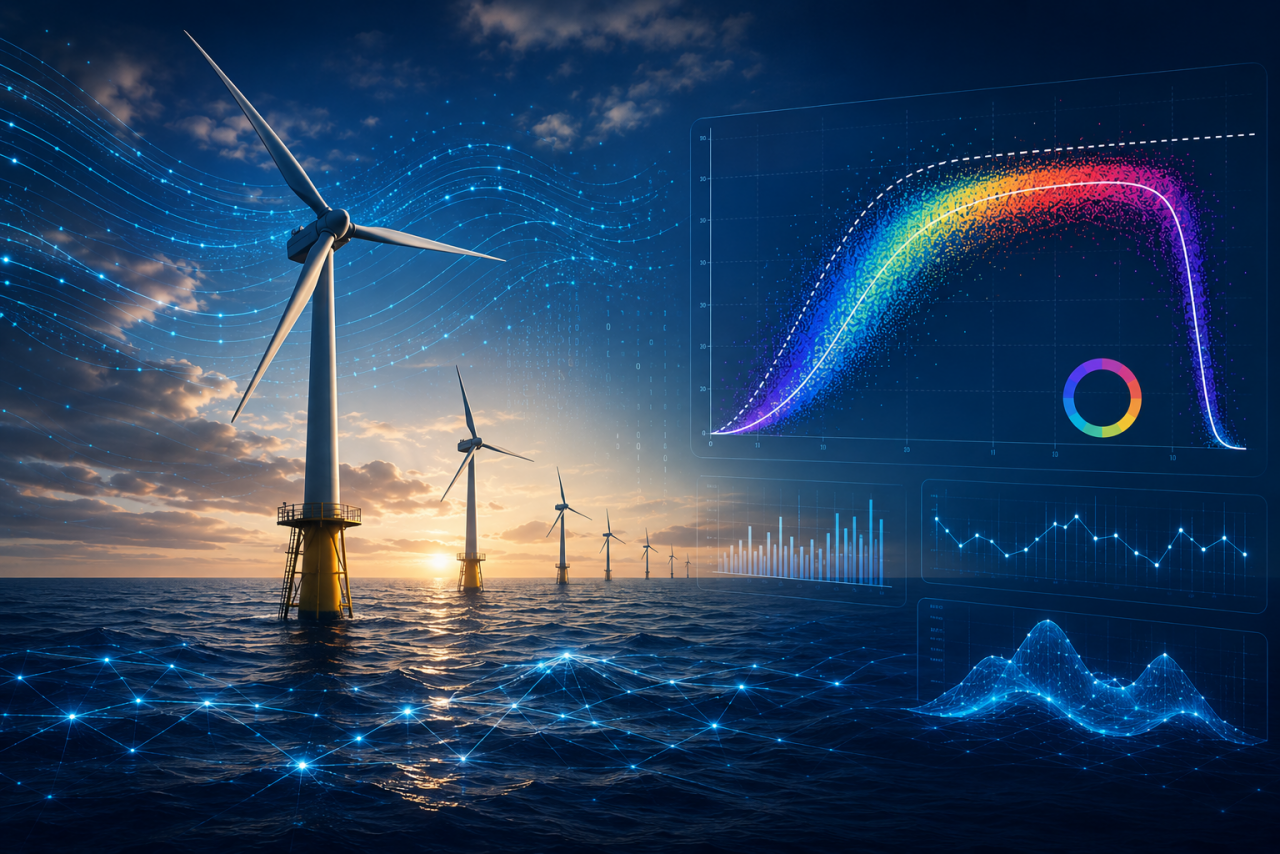
- An interactive dashboard plotting production-vs-wind scatter points and the reconstructed real power curve for each French offshore wind farm, with complementary analyses added as time allows (wake effects by wind direction, comparison with the theoretical curve, cross-farm smoothing).
- Which skills the challenge owner is looking for
- Data analyst / data scientist (time series); IT developer (API & data pipeline); data visualization specialist; energy or aerodynamics engineer; public policy profile