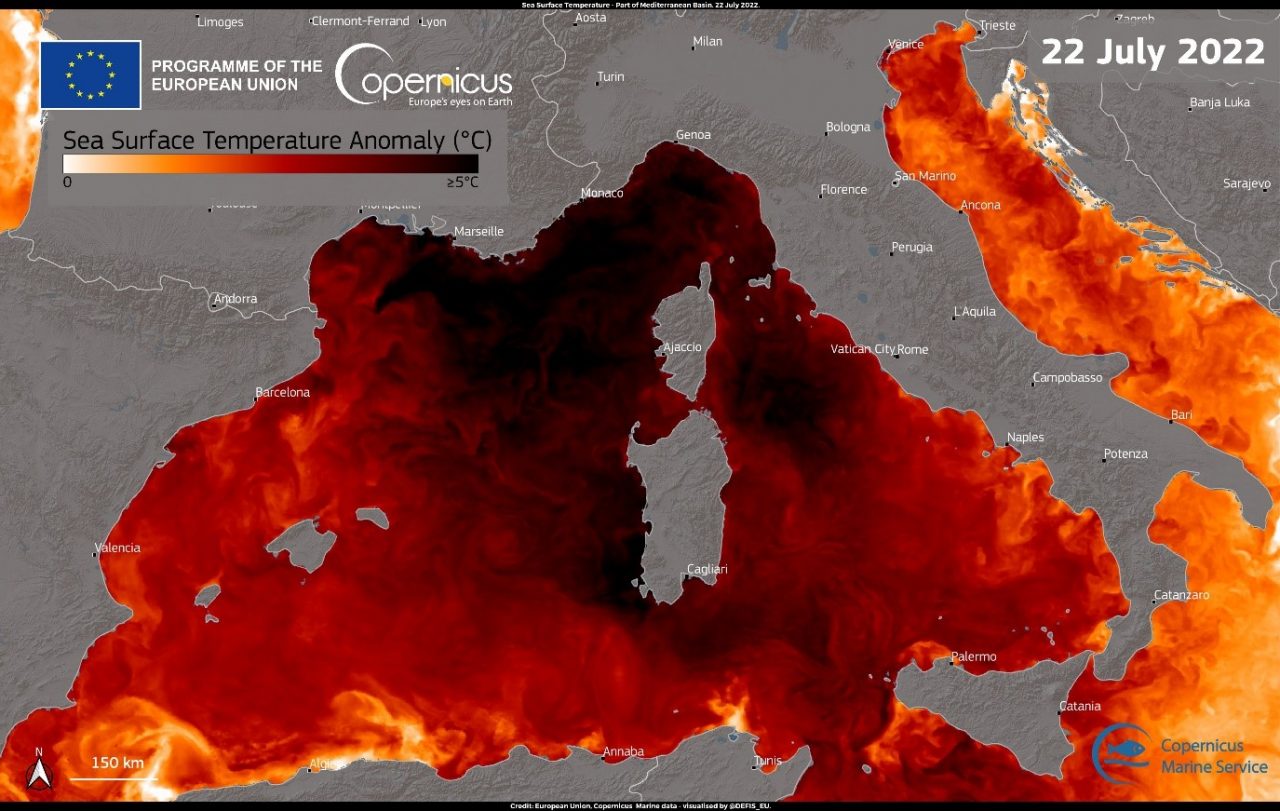
TLN01 - Detection and monitoring of marine heatwaves in near real time
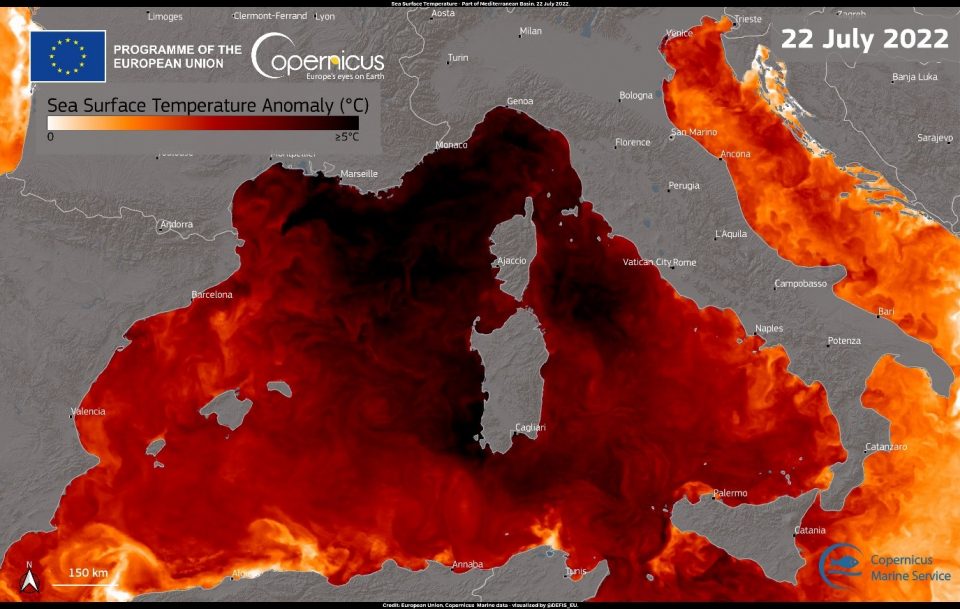
- Visualisation based on Copernicus Marine Environment Monitoring Service (CMEMS) data.
Toulon
- Organisation
- Cerema Normandie-Centre
- Jeanne Cassandre
With climate change, marine heatwaves are having a growing impact on marine ecosystems and aquaculture activities. A tool developed by Cerema already makes it possible to detect and visualize marine heatwaves (available here). However, this tool relies on in situ temperature data, which presents numerous limitations: delays in data availability, the complexity of updating the data, and the fact that it does not cover all shellfish farming areas. These limitations therefore restrict the ability to detect ongoing events and anticipate their consequences. At the same time, satellite data on sea surface temperature are available in near real time and cover vast geographic areas. They offer a unique opportunity to develop monitoring tools, particularly for marine heatwaves.
Objectives : to develop a prototype capable of :
- Automatically collecting satellite data ;
- Apply the methodology of Hobday et al. (2016) to automatically detect marine heatwaves ;
- Visualize marine heatwaves on a single, interactive map interface ;
- Implement an alert system that signals the onset or progression of a marine heatwave ;
- Verify the system’s robustness using in situ data.
Today, we look at marine heatwaves through the rear-view mirror. Our goal is to start looking at the road ahead!
You want to join the team:
- What the challenge owner would like to develop over 48h
- an interactive tool that would allow users to visualize the behavior of marine heat waves for a specific area and on a selected date
- Which skills the challenge owner is looking for
- oceanography/marine scientist, data (satellite data) analyst / scientist, software development, GIS scientist...