ORK03 AI-Driven Analysis of Climate Impacts on Coastal Ocean Phytoplankton Biodiversity
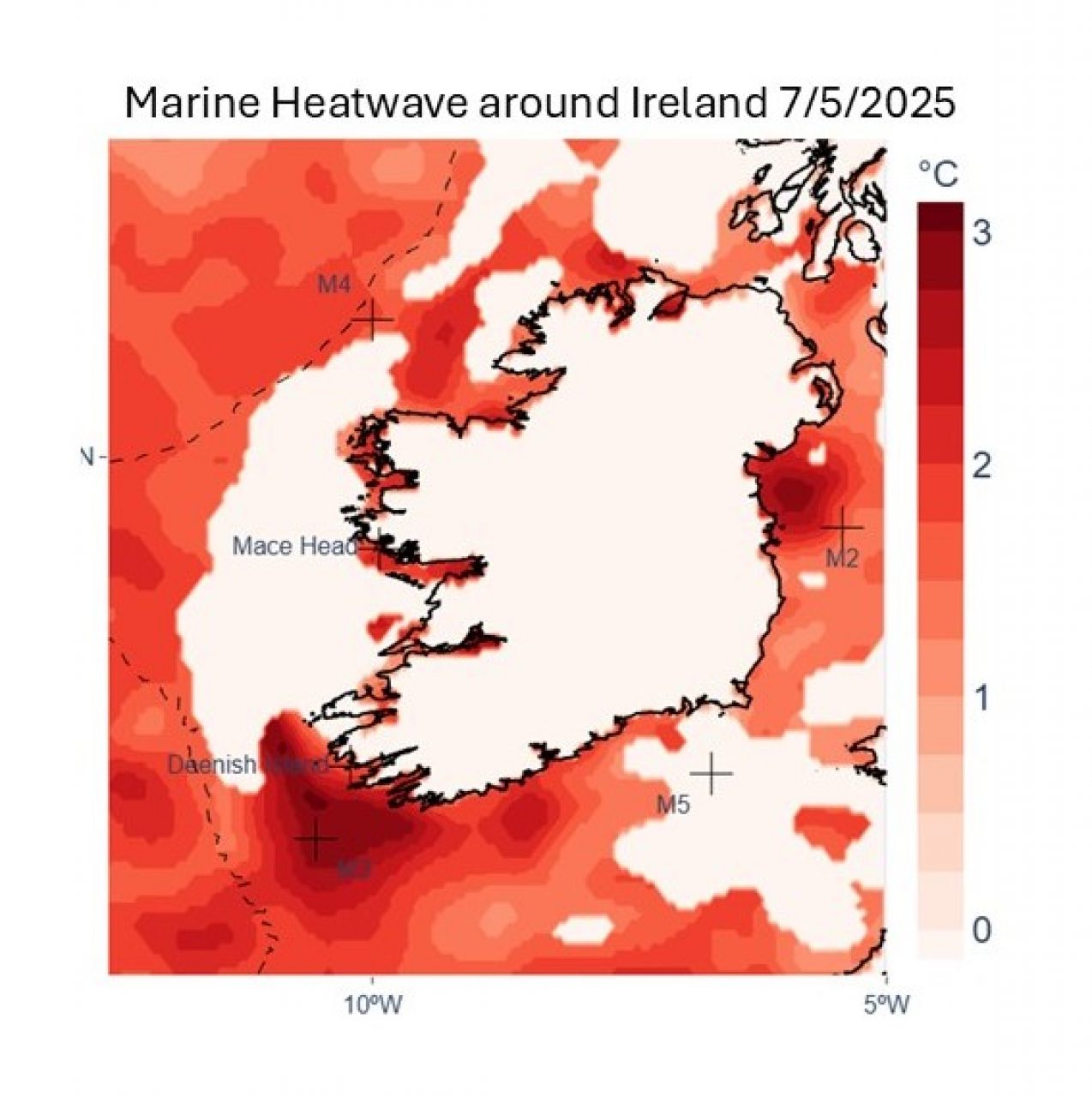
- Marine Institute Ireland Marine Heat Waves
Cork
- Organisation
- Marine Institute Ireland
- Felix Sproll
Marine heatwaves (MHWs) are prolonged periods of unusually high ocean temperatures that are increasing in frequency and intensity due to climate change. These events can disrupt marine ecosystems by altering water column structure, nutrient availability, dissolved oxygen levels, and biological productivity. Phytoplankton, the foundation of marine food webs and a major driver of global carbon cycling, are particularly sensitive to changes in temperature and ocean chemistry. However, the full impacts of MHWs on phytoplankton dynamics and coastal biodiversity remain poorly understood. Using real-time ocean observation, remote sensing, and AI-driven analysis, this project investigates the effects of marine heatwaves on coastal biodiversity, with a particular focus on phytoplankton. By integrating environmental parameters including sea surface temperature, salinity, dissolved oxygen, and CO₂, we explore hidden correlations and early indicators of ecosystem stress and develop and develop an AI-powered predictive model to support biodiversity monitoring, resilient coastal management, and early warning systems for Harmful Algal Blooms (HABs).
You want to joint the team:
- What the challenge owner would like to develop over 48h
- Develop a prototype that integrates satellite-derived Sea Surface Temperature (SST) and other environmental parameters to investigate the impacts of marine heatwaves on coastal phytoplankton communities. The solution will identify relationships between heatwave events and ecosystem stress, if possible generating early-warning indicators/user interface for harmful algal blooms (HABs). The solution will support proactive aquaculture management and help better understand the impacts of climate change on biodiversity.
- Which skills the challenge owner is looking for
- AI Engineer
Data analyst
Phytoplankton expert
GIS specialists
Marine Biologist
Software developers
UX/UI designers
Aquaculture knowledge