OLH03 - AQUASHIELD
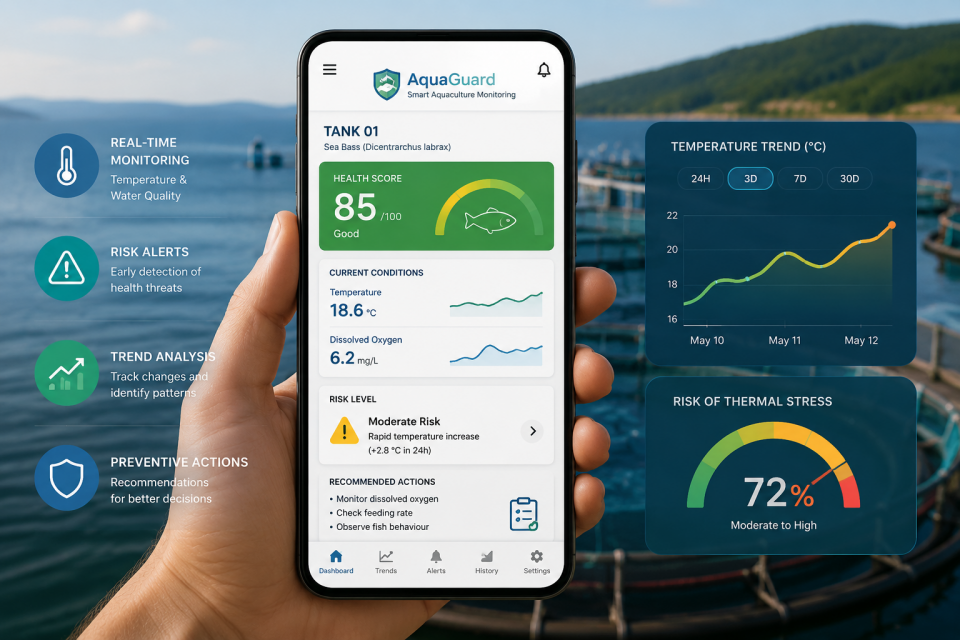
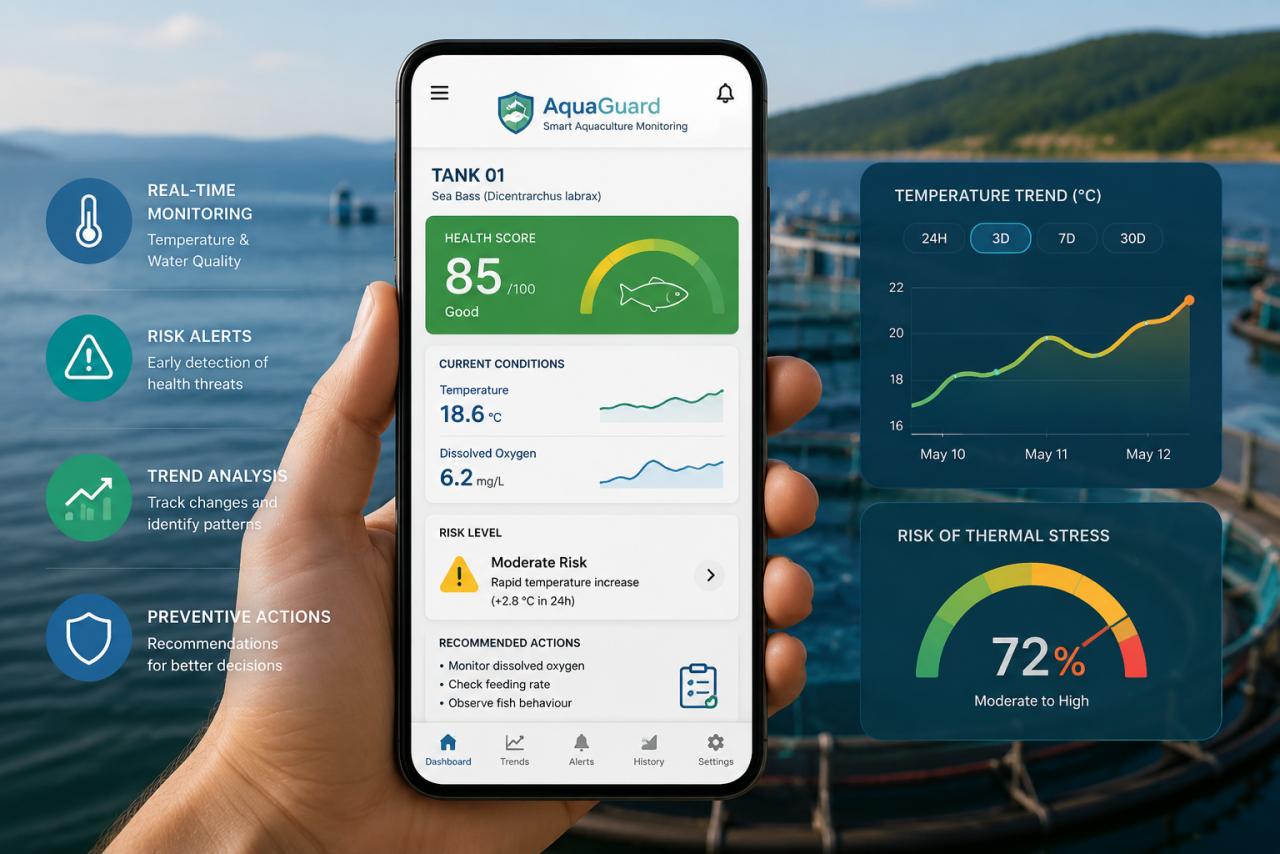
- Made with the aid of Artificial Intelligence (Chat GPT).
Olhão
- Organisation
- S2AquaColab / IPMA (Instituto Português do Mar e da Atmosfera)
- Marcelo Livramento & Ivo Monteiro
The sustainability and profitability of aquaculture depend not only on production efficiency but also on the ability to prevent disease outbreaks and ensure animal welfare throughout the production cycle. In intensive farming systems, outbreaks caused by parasites, bacteria, oxygen depletion, or sudden temperature fluctuations can result in high mortality rates, economic losses, and increased use of therapeutic treatments. These events are often preceded by behavioural and environmental indicators, such as reduced feed intake, changes in fish behaviour, or variations in water quality. However, behavioural indicators are not always easily identified or recorded during daily operations, limiting the implementation of timely preventive measures. An intelligent mobile monitoring application could support the early detection of potential risks through a simple daily recording system based on field observations and key environmental parameters, including water temperature and dissolved oxygen. By combining decision-tree algorithms with biological knowledge, the platform could estimate risks associated with thermal stress, parasitic infestations, or oxygen deficiency, generating real-time alerts and recommending preventive actions. Dashboards displaying trends and dynamic welfare indicators would support decision-making, helping to reduce losses, improve animal welfare, and enhance the sustainability of aquaculture production systems.
You want to join the team:
- What the challenge owner would like to develop over 48h
- A smart mobile application will be developed, based on the integration of historical and real-time data on water quality, with a particular focus on critical parameters such as temperature and dissolved oxygen. Additionally, the platform will incorporate bibliographic knowledge on the relationship between variations in these environmental parameters and the occurrence of diseases in aquaculture species, as well as real-time behavioral data from fish.
By combining these different types of data, the system will use rule-based models and inference algorithms to analyze patterns and identify deviations from conditions considered optimal for the species. In this way, the application will be capable of estimating, in real time, the probability of adverse events, such as disease outbreaks or environmental stress situations.
The aim of the tool is to support decision-making in aquaculture operations by providing early warnings and continuous assessment of sanitary risk, thereby contributing to loss prevention, improved animal welfare, and increased production efficiency.
- Which skills the challenge owner is looking for
- It will be necessary to involve professionals with experience in aquaculture, water quality, with a special focus on data interpretation and biological safety, given the complexity and biological nature involved in the development of the prototype.
In parallel, data management and analysis will require profiles with skills in engineering and data science, capable of working with large volumes of information. Knowledge of databases (such as SQL) will be particularly relevant, as well as programming languages like Python or other analytical tools that support the development of predictive models and the structure of the application.