GAL03 - Ocean Eats: Smart Offshore Food Delivery for Sri Lanka's Fishing Community
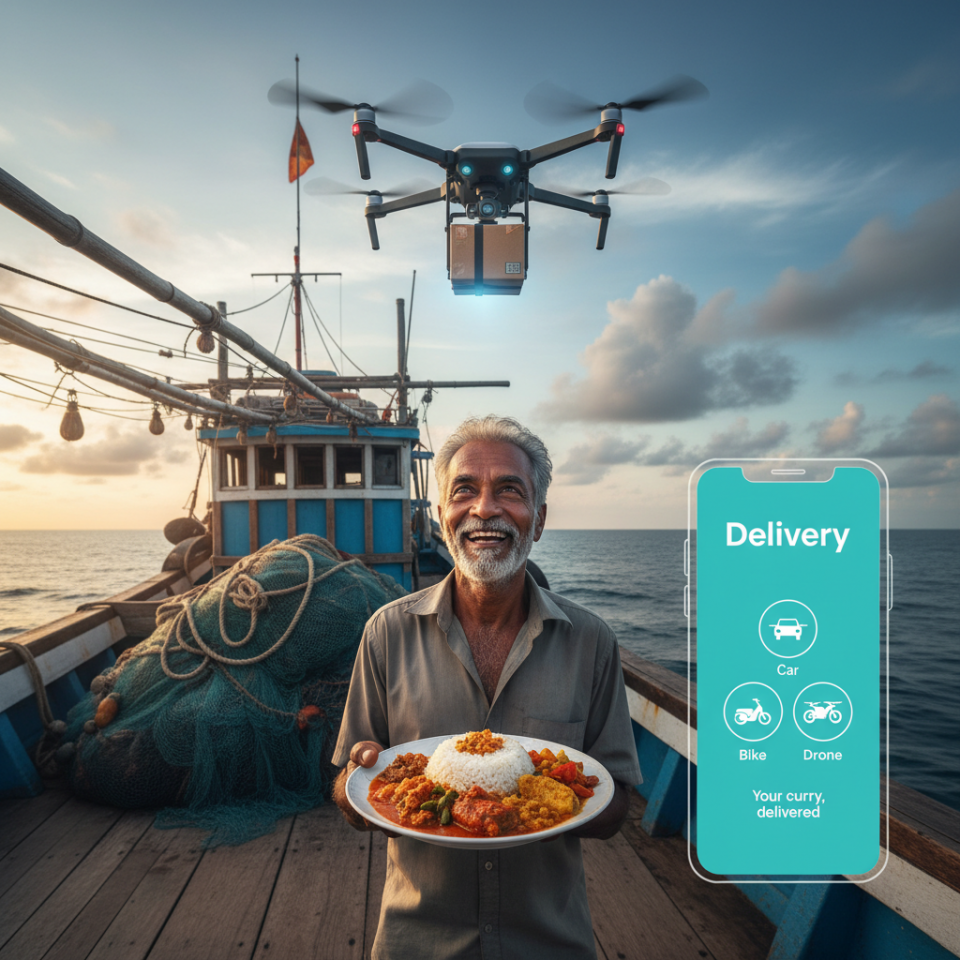
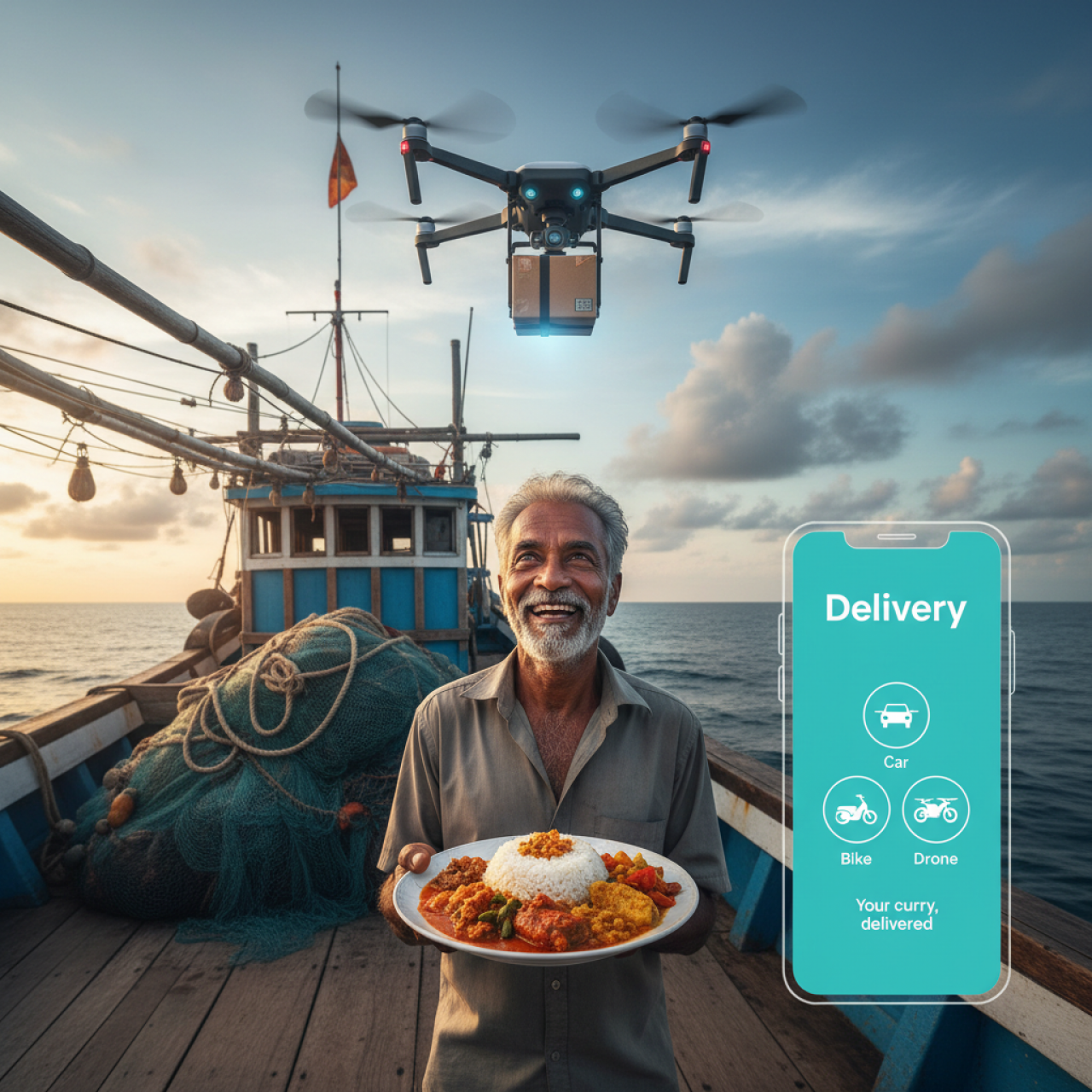
- DaVinci AI- Generated by Dr. Anna W Karunatilleke (CINEC Campus)
Galle
- Organisation
- CINEC Campus Pvt Ltd
- Ishanka Dedigama
Feeding Those Who Feed Us: A Drone-Enabled Hot Meal Delivery Solution for Sri Lankan Fishermen at Sea: Sri Lanka is an island nation with a rich maritime heritage and a thriving fisheries sector that plays a vital role in food security, employment, and economic development. Thousands of fishermen venture into the ocean daily, often spending long hours or even several days at sea under physically demanding conditions. These fishermen are the backbone of the country's seafood industry, supplying fresh fish to local and international markets while supporting the livelihoods of countless coastal families. Despite their significant contribution to the economy and national food supply, fishermen face numerous challenges during their time at sea. One of the most overlooked yet critical issues is access to nutritious, fresh, and hot meals. Most fishermen rely on food prepared before departure, which often becomes cold, stale, or spoiled after prolonged exposure to heat and humidity. Limited onboard cooking facilities, inadequate food storage systems, and long fishing trips further exacerbate the problem. As a result, many fishermen consume low-quality meals that fail to provide the energy and nutrition required for their physically intensive work. This project introduces an innovative and technology-driven solution that seeks to transform the way food is delivered to fishermen operating offshore. By integrating a mobile food-ordering platform with advanced drone delivery technology, the project aims to provide fishermen with access to freshly prepared hot meals while they remain productive at sea. This initiative represents a unique convergence of digital innovation, drone logistics, maritime operations, and community development.
The Challenge: Fishing is one of the most demanding occupations in Sri Lanka. Fishermen frequently depart before dawn and return only after spending several hours or days at sea. During this period, they are isolated from many of the services available on land, including access to fresh food.
Several challenges contribute to this problem:
1.Limited Access to Nutritious Food - Most fishermen carry meals prepared at home or purchase food before departure. Due to prolonged exposure to varying temperatures and environmental conditions, food quality often deteriorates significantly before consumption. This not only affects taste but may also lead to food safety concerns.
2.Reduced Productivity - Poor nutrition directly impacts energy levels, concentration, and physical endurance. Fishermen engaged in hauling nets, sorting catches, operating equipment, and navigating vessels require sustained energy throughout their journeys. Inadequate meals can contribute to fatigue, reduced productivity, and lower overall wellbeing.
3.Economic Inefficiencies- Returning to shore solely to replenish food supplies results in lost fishing time, increased fuel consumption, and reduced income opportunities. For small-scale fishermen operating on narrow profit margins, these inefficiencies can significantly affect earnings.
4.Lack of Maritime Support Services- Unlike urban populations that benefit from sophisticated food delivery networks, fishermen operating offshore have limited access to modern convenience services. This gap highlights an opportunity to extend digital innovations beyond traditional land-based environments.
The Innovative Solution: This project proposes the development of a comprehensive offshore meal delivery ecosystem that combines a dedicated mobile application, restaurant partnerships, real-time vessel tracking, and autonomous drone delivery systems. The solution enables fishermen to order freshly prepared meals while at sea and receive them directly on their vessels without interrupting fishing operations. The service functions through collaboration among multiple stakeholders, including: Local restaurants and food vendors, Fishing communities and fisheries cooperatives, Food delivery platform providers, Drone logistics companies, Maritime authorities and regulatory agencies, Telecommunication service providers, Local government institutions.
Together, these stakeholders create an integrated network capable of delivering hot meals efficiently and safely to offshore fishing vessels. How the System Works: Step 1: Registration and Profile Creation- Fishermen register through a mobile application specifically designed for maritime users. The platform stores essential information such as vessel details, location, payment methods, meal preferences, and emergency contact information. The application can be offered in Sinhala, Tamil, and English to ensure accessibility for all fishing communities. Step 2: Real-Time Location Sharing- Using GPS technology installed on smartphones or vessel tracking devices, fishermen can securely share their real-time location through the application. The system continuously updates vessel coordinates, enabling accurate delivery planning and route optimisation. Step 3: Meal Selection and Ordering- Fishermen browse menus from participating restaurants and food vendors located in nearby coastal communities. Available options may include: Rice and curry meals, Seafood dishes, Vegetarian meals, Breakfast packages, Energy-rich snacks, Fresh fruit packages, Hot beverages, Hydration supplies. Orders can be customised according to dietary requirements and group sizes. Step 4: Restaurant Preparation- Upon receiving an order, participating restaurants prepare the meals using standardised packaging and food safety procedures. Meals are packed in specially designed insulated containers capable of maintaining temperature and freshness throughout the delivery journey, and brought to the drone operations centre through a delivery platform provider. Initial discussions are currently being held with a leading delivery platform operator in Sri Lanka to collaborate on this challenge. Step 5: Drone Dispatch- Once prepared, meals are transferred to a drone operations centre located near the coastline. Autonomous drones equipped with navigation systems and weather-monitoring technology transport the food directly to the vessel's location. Step 6: Offshore Delivery- Upon arrival, the drone hovers above the designated vessel and lowers the food package. The delivery is confirmed through the mobile application, and fishermen receive their meals while continuing fishing operations uninterrupted. Technology Components: 1.Mobile Application- The mobile application serves as the central interface connecting fishermen, restaurants, and drone operators, we would be discussing with PICKMe to operate with their App. Key features include: GPS location tracking, Real-time order monitoring, Digital payment options, Multilingual interface, Emergency communication functions, Delivery notifications, Weather alerts, Customer feedback systems. 2.Autonomous Drones- The drones represent the project's core innovation. Features include: Long-range flight capability, Autonomous navigation, GPS-guided routing, Weather monitoring sensors, Insulated delivery compartments, Collision avoidance systems, Emergency return functionality, Maritime tracking integration 3.Data Analytics Platform- A centralized analytics platform can optimize operations by: Predicting demand patterns, Identifying popular delivery routes, Monitoring delivery performance, Improving drone utilisation, Supporting decision-making for future expansion. Benefits for Fishermen: 1.Improved Nutrition and Health- Access to fresh, nutritious meals supports physical wellbeing, reduces fatigue, and improves overall health outcomes. 2.Increased Productivity- Fishermen can remain focused on fishing activities rather than managing food supplies or returning to shore unnecessarily. 3.Enhanced Safety- Reducing non-essential vessel movements decreases exposure to maritime risks and adverse weather conditions. 4.Improved Quality of Life- The availability of fresh meals enhances morale and contributes positively to the overall fishing experience. Benefits for Coastal Communities: 1.Economic Opportunities- Local restaurants gain access to a new customer segment and additional revenue streams. 2.Job Creation- The project creates employment opportunities in: Drone operations, Technical maintenance, Food preparation, Logistics coordination, Software management. 3.Strengthened Local Economies- The initiative encourages collaboration among coastal businesses, fisheries organizations, and technology providers. Environmental Benefits: Compared with using support boats for food deliveries, drone-based logistics can significantly reduce fuel consumption and greenhouse gas emissions. Environmental advantages include: Lower carbon footprint, Reduced marine traffic, Decreased fuel use, Improved sustainability of maritime support operations. This aligns with global efforts to promote greener maritime industries and sustainable blue economy initiatives. Potential Expansion Opportunities: Once established, the platform can evolve beyond food delivery. Future services could include: Delivery of medicines and first aid supplies, Emergency equipment transport, Fishing gear replacement, Communication devices, Water and hydration supplies, Documentation and permit delivery. In emergency situations, drones could also support search and rescue operations by delivering life-saving equipment before rescue vessels arrive. Regulatory and Operational Considerations: Successful implementation requires close collaboration with maritime authorities and aviation regulators. Key considerations include: Airspace management, Maritime safety regulations, Drone certification requirements, Data security and privacy, Insurance coverage, Emergency response procedures. Pilot projects conducted in selected fishing communities can help validate the concept before national expansion. Alignment with National Development Goals: This project directly supports Sri Lanka's ambitions to modernise its fisheries sector and embrace digital innovation. It contributes to several national priorities, including: Strengthening the blue economy, Promoting technological innovation, Enhancing food security, Supporting rural livelihoods, Improving occupational wellbeing, Encouraging sustainable economic growth. The initiative also aligns with the United Nations Sustainable Development Goals, particularly SDG 2 (Zero Hunger), SDG 8 (Decent Work and Economic Growth), SDG 9 (Industry, Innovation and Infrastructure), SDG 11 (Sustainable Communities), and SDG 14 (Life Below Water). This is more than a food delivery service, it is a transformative solution designed to improve the lives of Sri Lanka's fishing communities through innovation, technology, and collaboration. By integrating mobile applications, autonomous drone technology, local restaurants, and fisheries stakeholders, the project creates a practical and scalable system that addresses a long-standing challenge faced by fishermen at sea.
The initiative has the potential to revolutionise maritime support services, enhance the wellbeing of thousands of fishermen, stimulate coastal economies, and position Sri Lanka as a regional leader in applying drone technology within the blue economy. Through strategic partnerships and forward-thinking implementation, this project can ensure that those who work tirelessly to feed the nation are themselves provided with safe, nutritious, and hot meals wherever they are on the ocean.
You want to join the team:
- What the challenge owner would like to develop over 48h
- Main Idea: Create an app-enabled delivery platform that allows fishermen at sea to order and receive food, while continuing their fishing operations.
Testing the following scenarios:
1.Testing the processing and completion of a single delivery order.
2.Optimise the system to handle and manage multiple deliveries.
3.Testing the dispute resolution process for delivery-related issues.
- Which skills the challenge owner is looking for
- IT expert
Navigation expert
Mechanical engineers
Mechatronics experts
Business analyst