ORK04 No Time for Grounding: A Real-Time Under Keel Clearance Monitoring for Ships to Safely Sail Shallow Waters
- Pixabay
Cork
- Individual
- Natasya Habibah
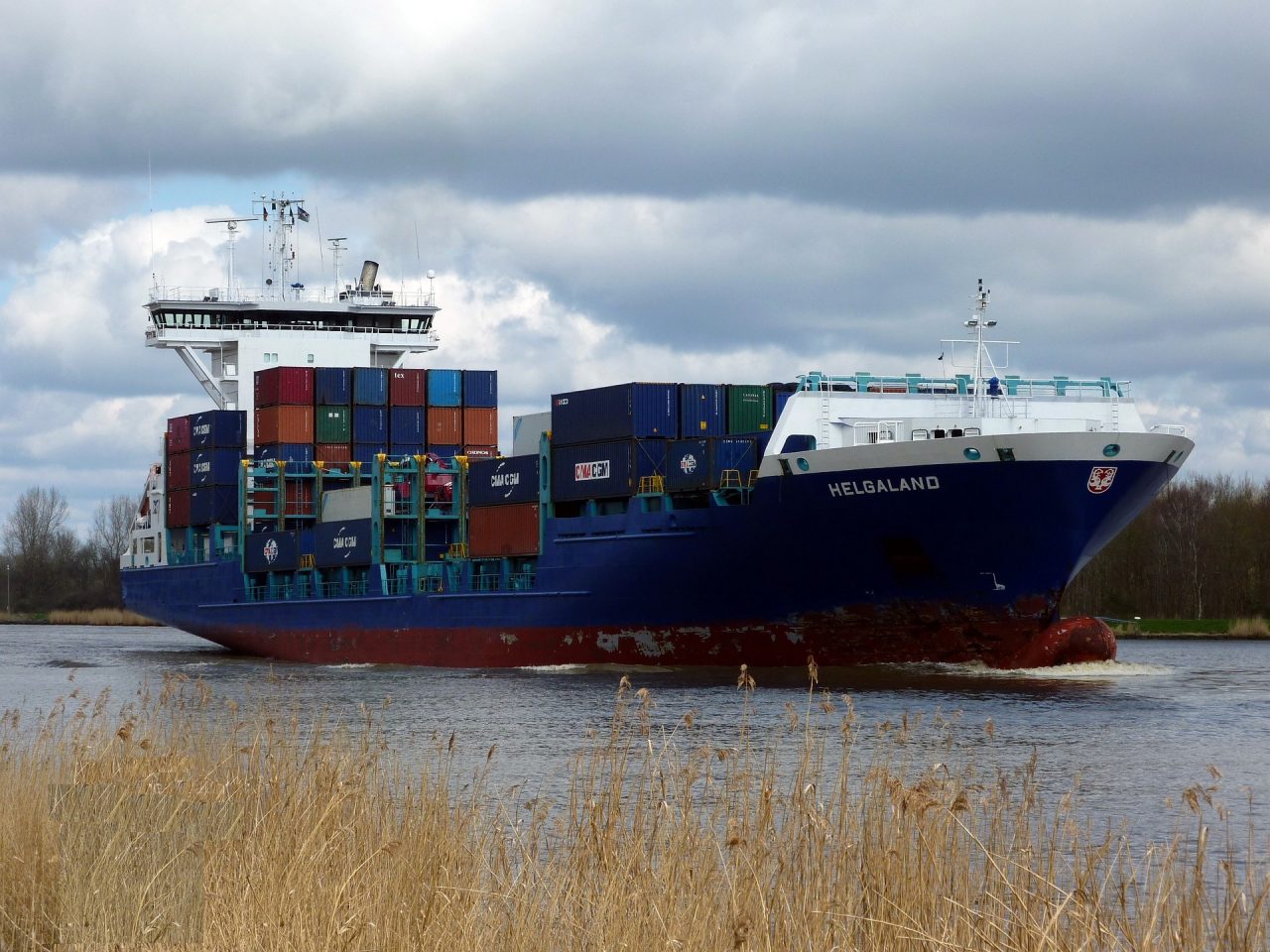
In March 2021, the container ship Ever Given got stuck in the Suez Canal and blocked one of the world’s busiest trade routes for six days. One reason for this was the shallow-water effect, which often happens in narrow waterways and can cause ships to run aground. In hydrodynamics, this effect is related to Under Keel Clearance (UKC), which is the ratio of the ship’s draft (the height of the part underwater, called T) to the water depth (h). UKC is usually shown as a percentage using the formula: (h-T)/T * 100%. The shallow water effect happens when the UKC drops below 50%. The challenge is that the shape of the seabed changes as the ship moves. This is especially relevant in the Cork coastal and waterways area, where water depths are quite shallow, and traffic is high. A monitoring system can help warn ships at risk of shallow-water effects by monitoring the UKC. They can do this by combining real-time ship draft data from the Automatic Identification System (AIS) with seabed maps that show water depth. With this approach, the system can alert a ship’s captain to take steps such as slowing down when the ship is at high risk of encountering shallow-water effects and prevent incidents like groundings.
- What the challenge owner would like to develop over 48h
- A real-time information system for mapping ships with a high risk of grounding caused by shallow water effects, which can alert the captain to take precautions
- Which skills the challenge owner is looking for
- Marine/Ship engineer, data scientist, IT, oceanographer