BRE11 Turning simulation into action for ammonia maritime incident management
- Droits réservés / RBINS
Brest
- Individual
- IMT Mines Alès
- Noémie Fréalle
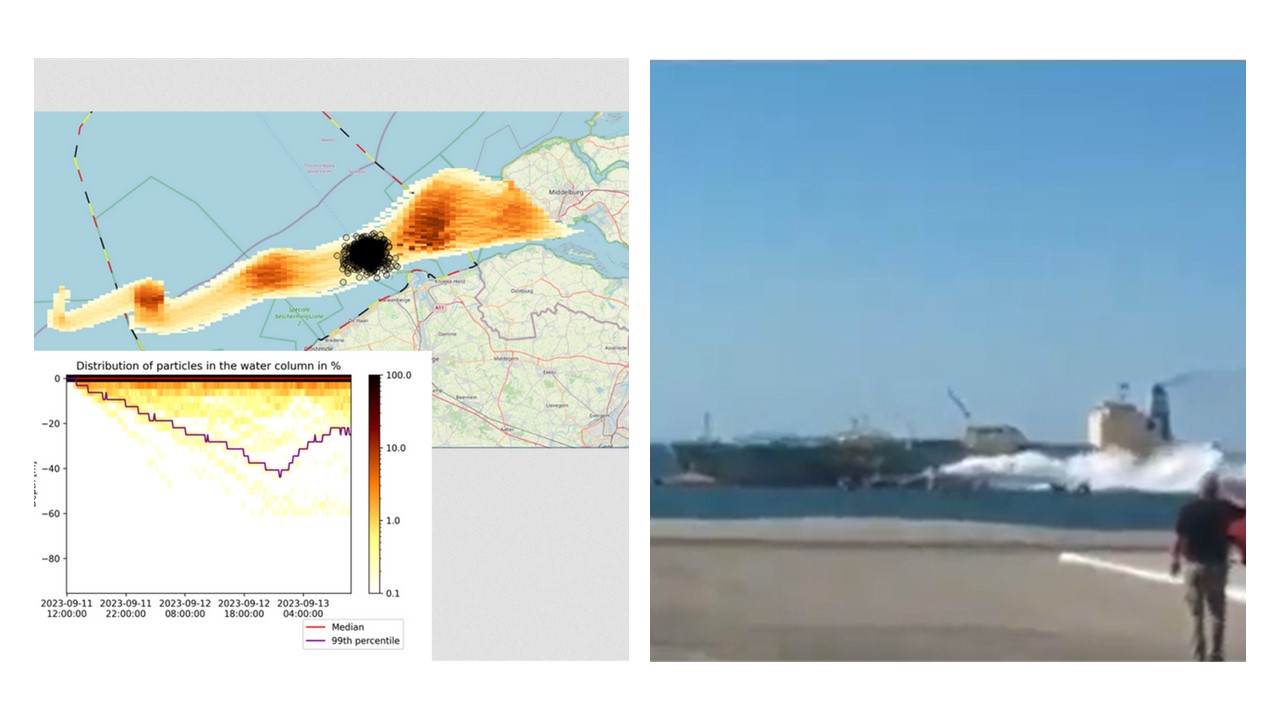
- The decarbonization of maritime transport is driving the adoption of alternative fuels, among which ammonia is considered one of the most promising options for future shipping. However, unlike conventional marine fuels, ammonia poses specific hazards due to its high acute toxicity, rapid atmospheric dispersion, potential impacts on aquatic ecosystems, and strong dependence on meteorological conditions.In the event of an accident involving an ammonia-fueled vessel or port infrastructure (e.g., collision, bunkering incident, pipeline rupture, or fire), emergency managers must make critical decisions within minutes. These decisions may include whether to evacuate or shelter populations, identify priority protection zones, restrict transportation routes, suspend port operations, and assess potential environmental consequences. While advanced simulation tools can model atmospheric and aquatic ammonia dispersion, their outputs are often presented as concentration maps and technical indicators that are difficult for non-specialist decision-makers to interpret under time pressure.As a result, there is a need for tools capable of translating complex simulation results into clear and actionable operational recommendations. This project aims to develop a decision-support framework that integrates simulation outputs with contextual information such as meteorological data, population distribution, port infrastructure, transportation networks, and environmental inventories. Building upon existing emergency response decision trees, the proposed system will automatically generate recommendations adapted to the evolving accident scenario. The objective is to bridge the gap between scientific modeling and crisis management, enabling faster, more informed, and more effective responses to ammonia-related maritime emergencies in coastal and port environments.
- What the challenge owner would like to develop over 48h
- Over the 48-hour event, we aim to develop a prototype decision-support tool for emergency managers dealing with ammonia-related maritime accidents. The tool will integrate atmospheric and aquatic dispersion simulation outputs with contextual data such as weather conditions, population exposure, critical infrastructure, transportation networks, and environmentally sensitive areas. Its main objective will be to translate complex simulation results into clear and actionable recommendations, helping decision-makers rapidly determine appropriate protective measures (e.g., shelter-in-place orders, evacuations, road closures, port activity restrictions, and environmental protection actions).
- Which skills the challenge owner is looking for
- Software Developer / Full-Stack Developer Data Scientist / Data Analyst GIS Specialist (Geomatics Engineer) Environmental Risk Assessment Specialist Atmospheric Dispersion Modelling Expert Maritime Safety and Emergency Management Specialist UX/UI Designer Decision Support Systems Engineer Articial intelligence Physicist (fluid mechanics)